
Quantum Research at the Simons Institute
In the wake of the National Quantum Initiative, the Simons Institute’s Research Pod in Quantum Computing brings together researchers from computer...
A Sloan Research Fellowship is one of the most prestigious awards available to early-career researchers.
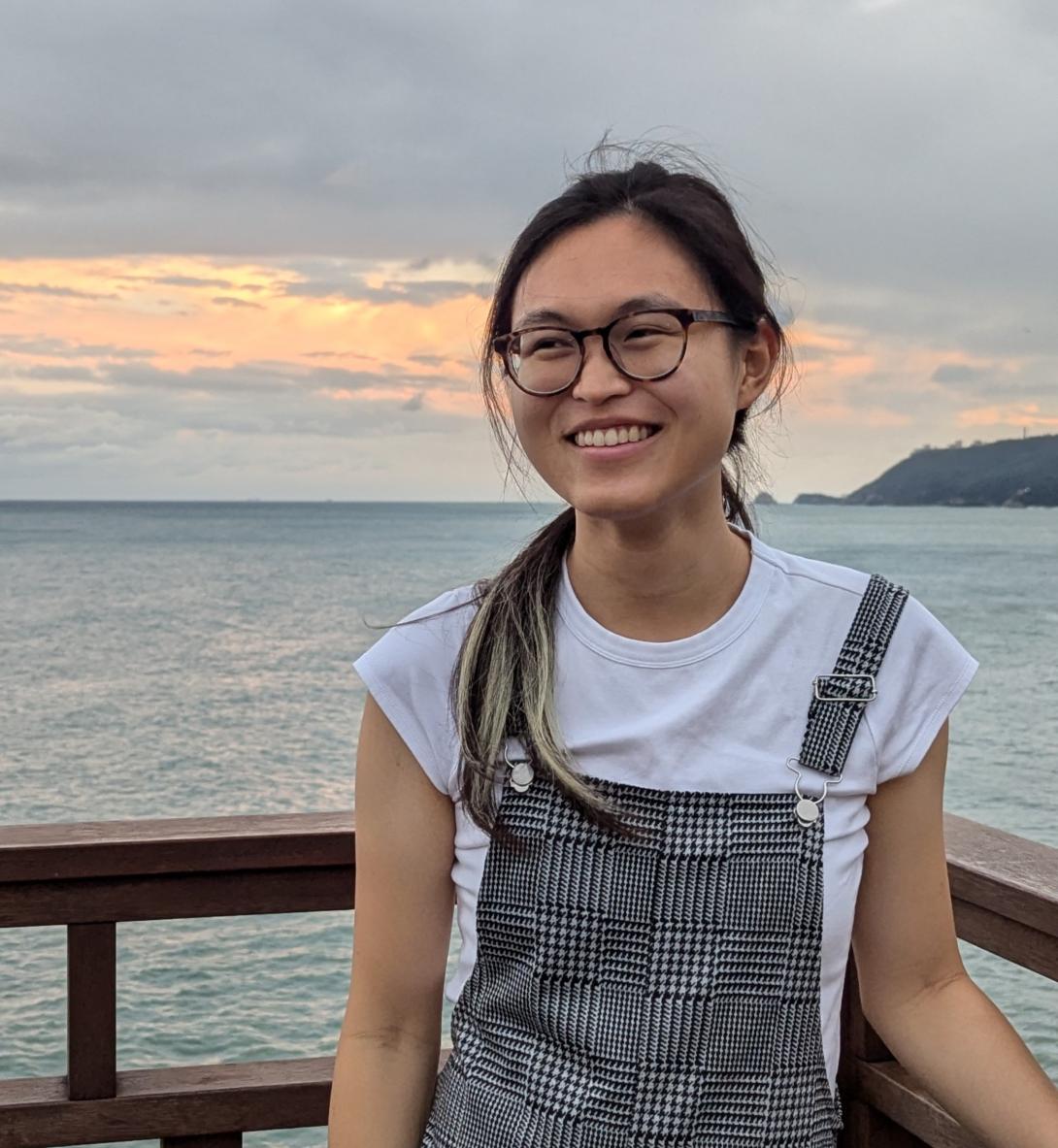
We’re delighted to share that Miller fellow and Simons Institute Quantum Pod postdoc Ewin Tang has been awarded the 2025 Maryam Mirzakhani New...
The Simons Institute for the Theory of Computing has received a $300,000 grant from the UC Noyce Initiative to hold a research program on Cryptography...
421 videos
The primary aim of this workshop is to address the recent surge of interests in the quantum simulation of open systems, encompassing topics such as Gibbs sampling, ground state preparation, simulation algorithms, and error corrections. By bringing together experts from Mathematics, Computer Science, Physics and Chemistry, the workshop seeks to foster interdisciplinary collaboration and create networking opportunities, particularly for young researchers.
This event will facilitate discussions to identify and highlight critical open questions for the next two years. Additionally, the workshop aims to raise awareness about the importance and challenges of quantum algorithms in open quantum systems, enhance cross-disciplinary understanding, and explore future collaborative projects. By achieving these objectives, the workshop intends to catalyze significant advancements in the field and pave the way for sustained interdisciplinary research collaborations.
Historically, making magic states was expected to be the dominant cost of fault tolerant quantum computation. This talk will discuss a construction, called "magic state cultivation", that (building on many previous results) seriously questions this dominance. Cultivation efficiently prepares good T states, fits inside a surface code patch, only uses square grid connectivity, and uses roughly the same number of physical gates as a lattice surgery CNOT gate of equivalent reliability.
This workshop will bring together researchers from academia and industry to explore topics from quantum complexity theory and cryptography to quantum algorithms, benchmarking, error correction, and fault tolerance. The program will have a special focus on NISQ (noisy intermediate-scale quantum) computers and complexity-based evidence of quantum advantage. A major challenge in this direction is improving quantum error-correcting codes and decoding algorithms for achieving early fault tolerance, and developing milestones for quantum advantage in the early fault tolerance regime.
If you require special accommodation, please contact our access coordinator at simonsevents@berkeley.edu with as much advance notice as possible.
Please note: the Simons Institute regularly captures photos and video of activity around the Institute for use in videos, publications, and promotional materials.
There has been a burst of recent progress on quantum error-correcting codes, across the physics, computer science, and math communities. This workshop will bring together researchers from all these communities to share recent progress and exchange ideas. Particular topics covered will include constructions of quantum LDPC codes and new algorithms for quantum codes.
This is a joint workshop between the Error-Correcting Codes: Theory and Practice program and the Quantum Algorithms, Complexity, and Fault Tolerance program.
If you require special accommodation, please contact our access coordinator at simonsevents@berkeley.edu with as much advance notice as possible.
Near-Term Quantum Computers: Fault Tolerance + Benchmarking + Quantum Advantage + Quantum Algorithms
This workshop will bring together researchers from academia and industry to study the capabilities of existing and upcoming quantum computers. Topics will include protocols for characterizing quantum noise, as well as tailoring fault-tolerance protocols to more concrete noise models. The other theme will be proofs of quantumness and other near-term algorithms suitable for such computers, as well as algorithms for scalable fault-tolerant quantum computers.
Please note: the Simons Institute regularly captures photos and video of activity around the Institute for use in videos, publications, and promotional materials.
The primary aim of this workshop is to address the recent surge of interests in the quantum simulation of open systems, encompassing topics such as Gibbs sampling, ground state preparation, simulation algorithms, and error corrections. By bringing together experts from Mathematics, Computer Science, Physics and Chemistry, the workshop seeks to foster interdisciplinary collaboration and create networking opportunities, particularly for young researchers.
This event will facilitate discussions to identify and highlight critical open questions for the next two years. Additionally, the workshop aims to raise awareness about the importance and challenges of quantum algorithms in open quantum systems, enhance cross-disciplinary understanding, and explore future collaborative projects. By achieving these objectives, the workshop intends to catalyze significant advancements in the field and pave the way for sustained interdisciplinary research collaborations.
This reunion workshop is for long-term participants in the program "Quantum Algorithms, Complexity, and Fault Tolerance," held in the spring 2024 semester. It will provide an opportunity to meet old and new friends. Moreover, we hope that it will give everyone a chance to reflect on the progress made during the semester and since, and sketch which directions the field should go in the future. In an effort to keep things informal and to encourage open discussion, none of the activities will be recorded. Participation in the workshop is by invitation only.
Sample Schedule (see schedule tab for more detail)
9:00-9:30 AM Check-in refreshments
9:30-10:00 AM Talk 1
10:30-11:00 AM AM Break
11:00-12:00 AM Talk 2
12:00-2:00 PM Lunch
2:00-3:00 PM Talk 3
3:00-3:30 PM PM Break
3:30-4:30 PM Talk 4
4:30-5:30 PM Reception (Day 1 only)
If you require special accommodation, please contact our access coordinator at simonsevents@berkeley.edu with as much advance notice as possible.
Please note: the Simons Institute regularly captures photos and video of activity around the Institute for use in videos, publications, and promotional materials.
This workshop will bring together researchers from academia and industry to explore topics from quantum complexity theory and cryptography to quantum algorithms, benchmarking, error correction, and fault tolerance. The program will have a special focus on NISQ (noisy intermediate-scale quantum) computers and complexity-based evidence of quantum advantage. A major challenge in this direction is improving quantum error-correcting codes and decoding algorithms for achieving early fault tolerance, and developing milestones for quantum advantage in the early fault tolerance regime.
If you require special accommodation, please contact our access coordinator at simonsevents@berkeley.edu with as much advance notice as possible.
Please note: the Simons Institute regularly captures photos and video of activity around the Institute for use in videos, publications, and promotional materials.
The Summer Cluster on Quantum Computing brings together researchers from academia and industry to explore topics from quantum complexity theory and cryptography to quantum algorithms, benchmarking, error correction, and fault tolerance. The cluster...
This program brings together researchers from computer science, physics, chemistry, and mathematics to address current challenges in quantum computing, such as the efficiency of protocols for fault-tolerant quantum computation, scalable proofs of...
The Summer Cluster on Quantum Computing will bring together researchers from academia and industry to explore topics from quantum complexity theory and cryptography to quantum algorithms, error-correction and fault tolerance, and benchmarking. ...
This program will bring together researchers from computer science, physics, chemistry and mathematics to focus on the two grand challenges of quantum computation: developing the most promising algorithmic applications for quantum computers, and...
Quantum Hamiltonian complexity is an exciting area combining deep questions and techniques from both quantum complexity theory and condensed matter physics. This interdisciplinary program will explore these connections and seek to establish a...
Quantum Research at the Simons Institute
The Simons Institute offers a variety of Quantum related programming from the ongoing Quantum Pod to semester long focused Quantum programs and clusters. We host Quantum related workshops, lectures, and activities such as the recurring Quantum Colloquium series and Quantum Industry Day. Much of this is made possible thanks to funding from the Quantum Pod and its grantors.